

Hailstorms don’t just pass through Texas they leave a financial trail behind them. And if you’re not careful, that trail leads straight to an underpaid or denied claim. Filing a roof hail damage insurance claim Texas homeowners can rely on isn’t just about calling your insurer. It’s about strategy, documentation, and knowing exactly what to look for.
I’ve seen it play out many times. Two homes sit on the same street. Same storm. Same damage pattern. One owner walks away with a full replacement. The other gets a fraction of the cost or nothing at all. The difference isn’t luck. It’s process. If you’re in Plano, understanding that process can protect your property and your finances in a big way. Let’s break it down step by step and build a claim that actually works.
Understanding How Hail Impacts Different Roof Types
Not all hail damage is obvious. And not all roofs respond the same way. This is where most claims begin—and where many fall apart.
Asphalt Shingle Roofs (Most Common, Most Misinterpreted)
Asphalt shingles take the brunt of most storms. They’re also the most misunderstood when it comes to a hail damage on roof insurance claim.
Here’s what to look for:
- Granule loss exposing darker substrate
- Soft bruising that feels spongy when pressed
- Random circular impact marks across slopes
Granules serve a purpose. They shield your roof from UV rays and extend its lifespan. When hail strips them away, the roof begins to deteriorate faster. Insurance carriers sometimes call this “normal wear.” It’s not. It’s functional damage that belongs in your roof hail damage insurance claim Texas.
Beyond the obvious, pay attention to pattern. Hail damage tends to appear randomly across a roof surface, while wear and tear usually follow consistent lines or edges. That distinction matters during inspections and can influence how your claim is evaluated.
Metal Roofs (Strong but Often Undervalued)
Metal roofs resist punctures. That’s the good news. The bad news? Damage still happens.
Common signs:
- Visible dents across panels
- Paint or coating damage exposing raw metal
- Seam misalignment affecting drainage
Insurance adjusters often label this as cosmetic. But cosmetic damage still reduces property value and affects performance. In a hail roof damage insurance scenario, that distinction matters more than most homeowners realize.
Tile Roofs (Fragile and Frequently Overlooked)

Tile roofs are durable until they’re not.
Watch for:
- Cracked or chipped tiles
- Displacement from impact
- Hidden fractures beneath the surface
The problem is timing. Damage may not show immediately. Weeks or months later, leaks begin. By then, proving the connection becomes harder. That’s why early inspection is critical for any hail damage on roof insurance claim.
Flat and Low-Slope Roofs
Flat systems are common on residential and commercial properties.
Look for:
- Membrane punctures
- Blistering or bubbling
- Changes in drainage patterns
These systems often hide damage below the surface. That hidden damage is exactly what gets missed in a typical roof hail damage insurance claim Texas.
Immediate Steps to Take After a Hailstorm
Speed matters. But so does accuracy.
Step 1 – Prioritize Safety
Stay off the roof initially. Wet surfaces and loose materials create real risk. Start your inspection from inside the home.
Step 2 – Conduct a Ground-Level Review
Use your phone camera. Zoom in. Capture visible damage without putting yourself in danger.
Step 3 – Prevent Further Damage
If water is entering your home:
- Place buckets or containers
- Cover exposed areas with tarps
Document everything. These steps reinforce your roof hail damage insurance claim Texas.
Step 4 – Notify Your Insurance Carrier
Keep it simple. Report the storm and possible damage. Avoid guessing.
Step 5 – Schedule a Professional Inspection
This is where claims start gaining strength. Professional inspections often uncover details that significantly impact your hail roof damage insurance payout.
How to Document Hail Damage for an Insurance Claim
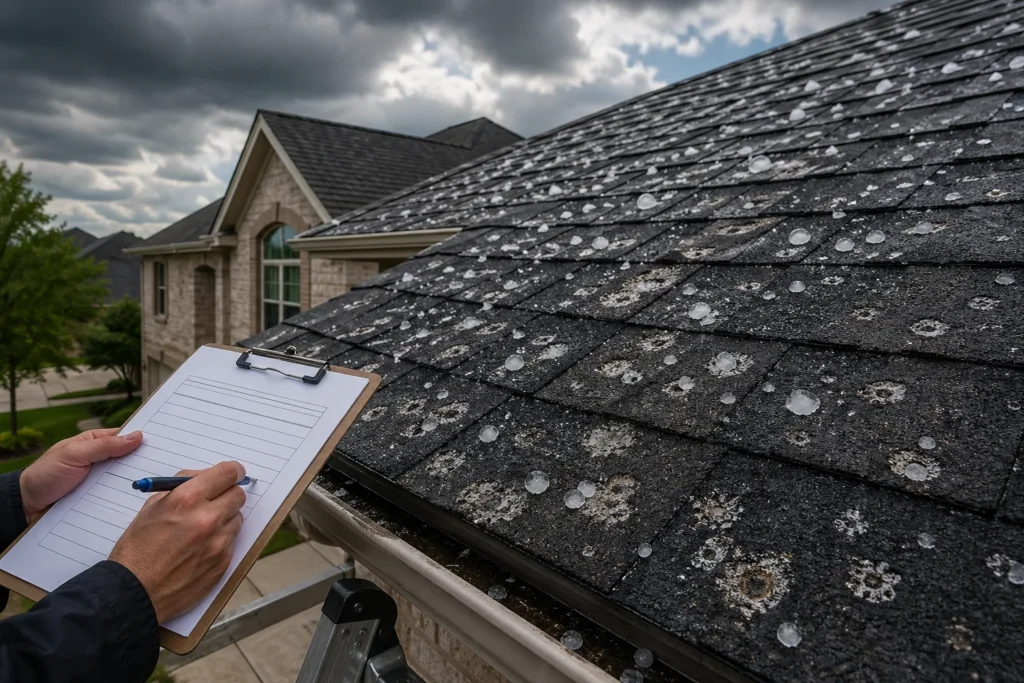
When it comes to How to Document Hail Damage for an Insurance Claim, precision matters more than effort. Strong claims are built on clear, organized evidence.
Your Photo Documentation Strategy
Capture both:
- Wide-angle roof photos
- Close-up impact shots
- Interior damage photos
Use reference objects for scale. Organize everything clearly so it’s easy to review.
Interior Damage Evidence
Exterior damage tells part of the story. Interior damage completes it.
Document:
- Ceiling discoloration
- Water stains
- Warped drywall
These details strengthen your hail damage on roof insurance claim and connect cause to effect.
Inspection Reports
Third-party inspections carry weight. They provide:
- Professional assessment
- Detailed damage descriptions
- Repair recommendations
This adds depth to your roof hail damage insurance claim Texas and strengthens your position.
Organizing Your Claim File
Structure matters.
Keep:
- Photos categorized by location
- Reports in chronological order
- Receipts for temporary repairs
- Notes documenting communication
Think like someone reviewing your file for approval. Clear organization builds confidence.
What Insurance Carriers Commonly Miss in Their Scope
This is where claims lose value. Many professionals describe this stage as Hail Damage Claim Supplements: What Carriers Miss in Their Scope, because initial estimates often overlook critical components.
Commonly Missed Items
| Category | Item | Impact |
| Roofing | Flashing | High |
| Ventilation | Ridge vents | Medium |
| Waterproofing | Underlayment | High |
| Edging | Drip edge | Medium |
Each missing item reduces your payout. Combined, they can significantly undercut your claim.
Code Upgrade Requirements
Building codes evolve. Insurance estimates don’t always keep up. If your roof must meet updated code requirements, those costs should be included in your roof hail damage insurance claim Texas. Overlooking this is one of the most common and expensive mistakes.
Labor and Tear-Off Costs
Not all labor is equal.
Factors that increase cost:
- Roof pitch
- Accessibility
- Material disposal
Insurance estimates sometimes undervalue these elements. Correcting them is key to a complete hail roof damage insurance claim.
Partial Replacement vs Full Replacement
Insurance carriers may suggest partial repairs. But partial fixes often lead to:
- Color mismatch
- Structural inconsistency
- Reduced property value
A strong hail damage on roof insurance claim pushes for full replacement when warranted.
The Supplement Process Explained
This is where claims gain momentum.
What Is a Supplement?
A supplement is an additional request for payment after the initial estimate. It accounts for missed or newly discovered damage. Simple concept. Powerful results.
How Supplements Increase Claim Value
They:
- Add overlooked items
- Adjust pricing to current rates
- Reflect full project scope
A well-executed supplement can transform a basic roof hail damage insurance claim Texas into a fully funded repair.
The Role of Estimating Software
Insurance companies rely on tools like Xactimate to calculate costs.
Understanding how these systems work allows professionals to:
- Write accurate estimates
- Challenge underpriced items
- Align with industry standards
Without this knowledge, negotiating a hail roof damage insurance claim becomes much harder.
Typical Supplement Timeline
- Additional damage identified
- Documentation submitted
- Carrier review conducted
- Adjustments approved
It requires patience. But the outcome is often worth it.
What to Do If Your Hail Claim Was Denied in Texas
Understanding What to Do If Your Hail Claim Was Denied in Texas can completely change your outcome. Denials happen. But they’re not final.
Common Reasons for Denial
- Insufficient evidence
- Misclassification as cosmetic damage
- Delayed reporting
How to Challenge a Denial
- Request a reinspection
- Submit stronger documentation
- Include expert reports
Escalation Options
- Invoke the appraisal clause
- File complaints if necessary
- Seek professional help
Many denied roof hail damage insurance claim Texas cases are later approved with the right approach.
Public Adjuster vs. Insurance Adjuster for Hail Claims in Texas
When evaluating Public Adjuster vs. Insurance Adjuster for Hail Claims in Texas, the difference comes down to representation and results.
| Role | Represents | Goal |
| Insurance Adjuster | Carrier | Minimize payout |
| Public Adjuster | You | Maximize claim |
Why Representation Matters
Public adjusters:
- Conduct detailed inspections
- Prepare comprehensive documentation
- Negotiate directly with insurers
That’s how outcomes shift in a hail damage on roof insurance claim.
Real Financial Impact
| Scenario | Amount |
| Without representation | $18,000 |
| With representation | $30,000 |
| Fee (10%) | $3,000 |
| Net payout | $27,000 |
Why Hiring a Public Adjuster Changes the Outcome

At some point, experience outweighs effort.
A public adjuster understands:
- Policy language
- Damage identification
- Claim strategy
They don’t just file claims they manage them from start to finish. In Plano, homeowners who use professional representation often see stronger outcomes because their roof hail damage insurance claim Texas is built with precision from the start.
Real-World Claim Scenario: Weak vs Strong Claim
Weak Claim
- Minimal photos
- No inspection
- Accepts initial estimate
Result: Underpaid.
Strong Claim
- Detailed documentation
- Supplement applied
- Professional negotiation
Result: Fully covered.
Outcome Comparison
| Scenario | Initial Offer | Final Payout |
| Weak Claim | $12,000 | $12,000 |
| Strong Claim | $12,000 | $28,000 |
Pro Tips to Maximize Your Roof Hail Damage Insurance Claim Texas
- Never accept the first offer
- Document immediately
- Get multiple inspections
- Keep communication in writing
- Understand your policy
Understanding Risk and Claim Outcomes
Insurance decisions rely on patterns and probability. Many decision models are influenced by complex frameworks such as Stochastic calculus, where outcomes evolve based on new information.
In simple terms, better evidence improves your claim’s success rate.
Conclusion: Protect Your Roof and Your Financial Outcome
Hail damage isn’t just a roofing issue. It’s a financial one.
A strong roof hail damage insurance claim Texas depends on:
- Early action
- Detailed documentation
- Strategic negotiation
If you’re in Plano, the storm may be out of your control but the outcome of your claim isn’t. Take control. Stay organized. And make sure your claim reflects the full scope of the damage.
FAQs
Most policies cover storm-related damage, but coverage depends on your policy terms and how well the damage is documented.
Deadlines vary by policy, but many insurers require claims to be filed within 6–12 months after the storm.
Start by documenting the damage with photos and then notify your insurance company as soon as possible.
Yes, minor damage can worsen over time and may still qualify under a hail damage on roof insurance claim.
Claims are often denied due to lack of evidence, late filing, or damage being labeled as cosmetic.
It’s helpful, as a professional inspection can identify damage that strengthens your hail roof damage insurance claim.
A supplement is a request for additional funds when missed damage or costs are discovered after the initial estimate.
Document thoroughly, get multiple inspections, and don’t accept the first offer without review.
Not always, but they can help increase payouts by identifying overlooked damage and negotiating effectively.
Yes, with new evidence or a reinspection, many denied claims can still be approved.