

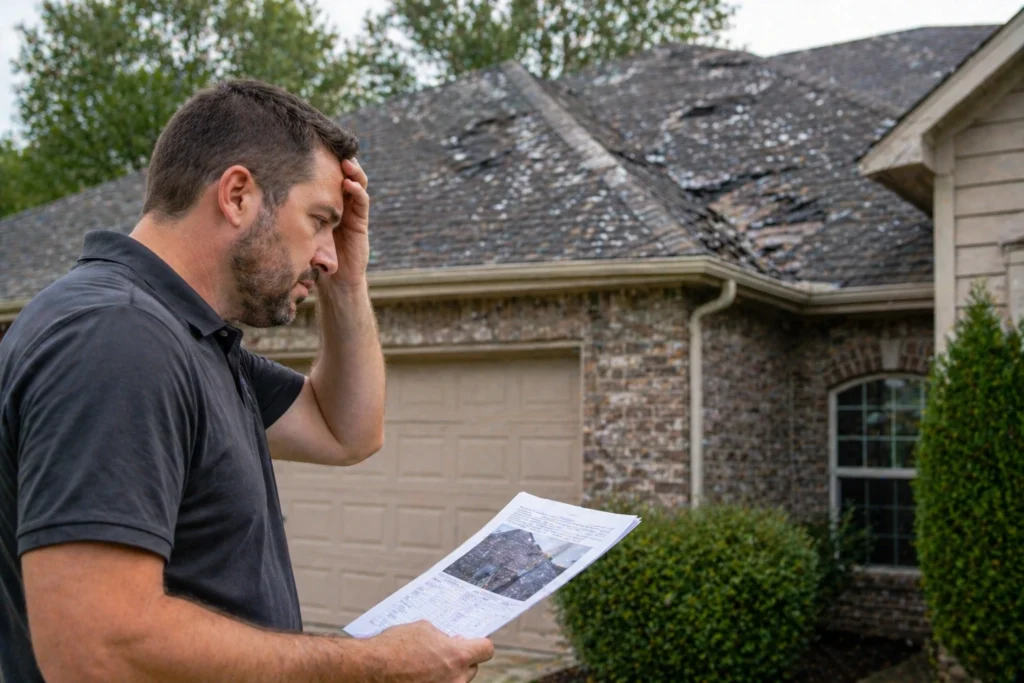
A hailstorm rolls through. It’s loud, fast, and destructive. You step outside afterward and immediately see signs of impact dented gutters, scattered debris, maybe visible bruising on your roof. You file an insurance claim, an adjuster comes out, and shortly after, you receive an estimate. It looks official. It looks complete. But something doesn’t sit right. That instinct is often correct. Because Hail Damage Claim Supplements: What Carriers Miss in Their Scope is one of the most important and most misunderstood parts of the claims process. The initial estimate is almost never the full story. Not because adjusters are careless, but because the process is built for speed, not depth.
In high-activity storm regions like Plano, claims move quickly. Adjusters are under pressure. Inspections are streamlined. And as a result, critical details are frequently missed. This is where supplements come in. And more importantly, this is where Xactimate expertise changes everything. A properly executed supplement doesn’t inflate your claim it corrects it. It ensures that every component, every layer, and every cost required to restore your property is accounted for. In this guide, we’re going deep. Not surface-level advice. Real insight. Practical steps. And a clear breakdown of how to turn an incomplete estimate into a fully developed, properly valued claim.
Understanding Hail Damage Insurance Claims
At first glance, hail damage claims seem straightforward. A storm causes damage. Your policy covers it. The insurance company pays to repair or replace affected areas. But the reality is more layered. Hail damage affects roofing systems in ways that are not always immediately visible. Sure, you may see obvious impact marks on shingles. But beneath that, there can be compromised underlayment, weakened structural components, and damaged accessories that aren’t visible without a deeper inspection.
Most insurance adjusters follow a standard process:
- Conduct a visual inspection of the roof and exterior
- Identify visible damage
- Document findings with photos
- Create an estimate using industry software
That process works for a baseline. But it doesn’t always capture the full scope of damage. Why? Because roofing systems are complex. They are built in layers. And when one layer is compromised, it often affects others.
A surface-level inspection can miss:
- Subtle hail bruising
- Underlayment damage
- Flashing failures
- Ventilation issues
These aren’t minor oversights. They directly impact the cost of repairs.
What Is a Claim Supplement?
A claim supplement is a formal request to revise and increase the original insurance estimate based on additional findings or corrected scope. It exists because the initial estimate is not final. It’s a starting point.
When Supplements Become Necessary
- Damage is discovered after initial inspection
- Repair requirements exceed original scope
- Code upgrades are identified
- Pricing inaccuracies are found
Breaking It Down
| Aspect | Initial Estimate | Supplement |
| Purpose | Quick assessment | Full correction |
| Detail Level | Basic | Comprehensive |
| Accuracy | Moderate | High |
| Outcome | Starting point | Final valuation |
Supplements are not aggressive tactics. They are standard practice. And when handled correctly, they are essential.
Why Insurance Carriers Miss Items in Their Scope
To understand supplements, you need to understand the gaps.
1. Post-Storm Volume Pressure
After a major hailstorm, adjusters may inspect dozens of properties per day. Time is limited. Efficiency is prioritized.
2. Limited Inspection Depth
Most inspections are visual and brief. They are not full system evaluations.
3. Generalist Approach
Adjusters are trained broadly. They may not have specialized roofing or construction expertise.
4. Template-Based Estimating
Many estimates rely on standard templates, which don’t account for property-specific conditions.
5. Cost Management
Insurance companies operate on risk models. Initial scopes may lean conservative.
These factors combine to create one consistent outcome: incomplete estimates.
Commonly Missed Items in Hail Damage Claims
This is the core of Hail Damage Claim Supplements: What Carriers Miss in Their Scope.
Let’s break it down clearly.
Roof System Components
- Underlayment replacement
- Starter strip installation
- Ridge cap damage
- Drip edge replacement
- Flashing repairs
Ventilation Systems
- Roof vents
- Turbine vents
- Pipe boots
- Attic ventilation upgrades
Exterior Structures
- Gutters and downspouts
- Siding panels
- Window screens
- Garage doors
Interior Damage
- Water intrusion stains
- Insulation degradation
- Ceiling damage
Code Compliance Items
- Ice and water barriers
- Decking upgrades
- Ventilation requirements
Each of these represents real labor and material cost. When omitted, those costs shift directly to the homeowner.
The Role of Xactimate in Claim Supplements

Xactimate is the backbone of modern insurance estimating.
But the software itself doesn’t guarantee accuracy. The user does.
Basic vs Expert Use
| Element | Basic Use | Expert Use |
| Measurements | Rough | Precise |
| Line Items | Limited | Comprehensive |
| Pricing | Default | Adjusted |
| Sketch Detail | Minimal | Advanced |
An expert uses Xactimate to build a complete representation of the project not just a rough estimate.
How Xactimate Expertise Changes the Outcome
Here’s where things get real.
An expert-level estimate includes:
- Every required component
- Correct labor adjustments
- Accurate material quantities
- Full system replacement details
Case Comparison
| Category | Initial Estimate | Expert Supplement |
| Shingles | Included | Included |
| Underlayment | Missing | Added |
| Flashing | Partial | Complete |
| Gutters | Missing | Added |
| Code Upgrades | Missing | Included |
The difference isn’t subtle. It’s substantial.
The Supplement Process Step-by-Step
Let’s walk through it in detail.
Step 1: Comprehensive Re-Inspection
A second inspection focuses on detail, not speed.
Step 2: Evidence Collection
Photos, measurements, and notes are gathered systematically.
Step 3: Xactimate Estimate Creation
A full, line-by-line estimate is built.
Step 4: Submission to Carrier
The supplement is formally submitted.
Step 5: Negotiation Phase
Adjusters review, question, and revise.
Step 6: Approval and Payment Adjustment
The claim is updated, and additional funds are issued.
Execution matters at every stage.
How to Document Hail Damage for an Insurance Claim
Documentation is leverage.
Key Elements to Capture
- Close-up damage photos
- Wide-angle roof views
- Interior damage evidence
- Pre-loss condition (if available)
Best Practices
- Use clear, high-resolution images
- Include timestamps
- Label and organize files
- Maintain a consistent format
Strong documentation supports strong claims.
Hail Damage Claim Supplements: What Carriers Miss in Their Scope (Deep Dive)
Let’s go deeper into the financial side.
The most commonly missed items are often:
- Underlayment systems
- Ventilation upgrades
- Code-required modifications
- Peripheral structures like gutters
Individually, these may seem minor. Combined, they create a significant gap. This is why Hail Damage Claim Supplements: What Carriers Miss in Their Scope is not just about accuracy it’s about financial protection.
A claim that only covers visible damage is incomplete. A claim that covers the entire system is correct. Interestingly, complex decision-making systems like those studied in Game theory show that outcomes depend heavily on how information is presented and negotiated. Insurance claims often follow a similar pattern: better data leads to better outcomes.
Advanced Xactimate Strategies That Drive Higher Claim Accuracy
This is where expertise separates average outcomes from optimized ones.
Detailed Roof Sketching
Accurate sketches ensure precise material calculations.
Waste Factor Inclusion
Roofing materials require waste allowances. Ignoring this leads to underpayment.
Pitch and Complexity Adjustments
Steep roofs and complex designs increase labor requirements.
Material Matching and Upgrades
Matching existing materials ensures proper restoration.
Line Item Expansion
Including all necessary components ensures nothing is overlooked.
These are not optional steps. They are essential for accuracy.
Real-World Supplement Scenario
Let’s put this into perspective.
A homeowner receives an initial estimate for $12,000.
After a detailed supplement:
- Underlayment is added
- Gutters are included
- Code upgrades are applied
- Flashing is corrected
Final claim value: $21,500.
That’s not inflation. That’s correction.
Common Challenges When Filing Supplements
You may face resistance.
Typical Issues
- Requests for additional documentation
- Disputes over necessity
- Delays in processing
How to Overcome Them
- Stay organized
- Provide clear evidence
- Use precise estimates
- Maintain consistent communication
Clarity reduces friction.
Tips to Strengthen Your Supplement Claim
Focus on these fundamentals.
- Conduct a second inspection
- Use detailed Xactimate estimates
- Document everything
- Keep all communication in writing
- Review your policy carefully
Consistency and detail drive results.
Public Adjuster vs Insurance Adjuster
Understanding this difference matters.
| Role | Works For | Objective |
| Insurance Adjuster | Carrier | Control claim cost |
| Public Adjuster | You | Maximize claim value |
Different incentives lead to different outcomes.
Local Insight: Hail Claims in Plano
In Plano, hailstorms are frequent enough that insurance carriers have streamlined their processes. That efficiency comes at a cost depth. Inspections can become routine. Standardized. Predictable.
But no two properties are identical. And no two claims should be treated the same. Homeowners in Plano benefit significantly from taking a closer look at their estimates. Because in a fast-moving environment, details are often missed.
When to Bring in a Public Adjuster
There are moments when professional help makes sense.
Consider It When
- Your estimate feels incomplete
- Damage appears underestimated
- The process becomes overwhelming
A public adjuster brings structure, expertise, and negotiation strength.
What to Do If Your Hail Claim Was Denied in Texas
If your claim is denied, don’t assume the process is over. Denials often stem from incomplete documentation, misinterpreted damage, or insufficient scope detail. Start by requesting a full explanation from your insurer. Then, conduct a detailed re-inspection and gather stronger evidence. In many cases, a well-supported supplement built with accurate Xactimate data can reopen discussions and lead to a revised outcome.
The Financial Impact of Missed Scope Items
Let’s quantify the gap.
| Category | Potential Cost Range |
| Underlayment | $1,500–$3,500 |
| Flashing | $800–$2,500 |
| Gutters | $2,000–$6,000 |
| Code Upgrades | $3,000–$8,000 |
Now combine them. The difference becomes undeniable.
Why Small Details Matter More Than You Think
Claims are not lost in major items. They are lost in accumulation. One missing line item may not matter. Ten missing items absolutely do. This is why Hail Damage Claim Supplements: What Carriers Miss in Their Scope focuses on detail. Because detail defines value.
How to Review Your Insurance Scope Like a Professional
You don’t need to be an expert. Just be thorough.
Checklist
- Are all roofing layers included?
- Are accessories listed?
- Are code requirements addressed?
- Is interior damage accounted for?
If anything is missing, your claim likely needs a supplement.
Common Mistakes Homeowners Make
Avoid these.
- Accepting the first offer without review
- Skipping detailed inspections
- Ignoring minor damage
- Failing to document thoroughly
Each mistake reduces your payout.
The Psychology of Insurance Negotiations
Confidence matters. Documentation builds confidence. Detail builds credibility. When your claim is well-supported, negotiations become smoother and faster.
Final Thoughts: Take Control of Your Claim
Hail damage is unpredictable. But your claim outcome doesn’t have to be.
A complete claim reflects:
- Full damage
- Accurate costs
- Proper scope
Anything less leaves money behind.
If you’re in Plano, the environment demands attention to detail. Storms are frequent. Claims move fast. But that doesn’t mean your claim should be rushed. Take control. Review your estimate carefully. Understand Hail Damage Claim Supplements: What Carriers Miss in Their Scope. Use Xactimate expertise to ensure every detail is accounted for. Because when everything is properly included, the difference is not small.
It’s transformative.
FAQs
A supplement is a revision to your original insurance estimate that adds missed damage or corrects underpriced items.
Adjusters often work under time pressure and may perform surface-level inspections, which can overlook deeper or less visible damage.
If your estimate seems low or doesn’t include all damaged components, it likely needs a supplement.
Xactimate is the industry-standard software used to create detailed, line-by-line estimates that support accurate claim valuations.
Yes, supplements can be filed during repairs if additional damage or costs are discovered.
Underlayment, flashing, gutters, and code upgrades are frequently left out of initial estimates.
It may add some time, but it ensures your claim reflects the full scope of damage and proper costs.
Not necessarily, but a public adjuster can help maximize your claim by identifying and documenting missed items.
Yes, if new evidence or a more detailed estimate is provided, a denied claim can sometimes be reconsidered.
Depending on what was missed, supplements can increase payouts by thousands of dollars.