
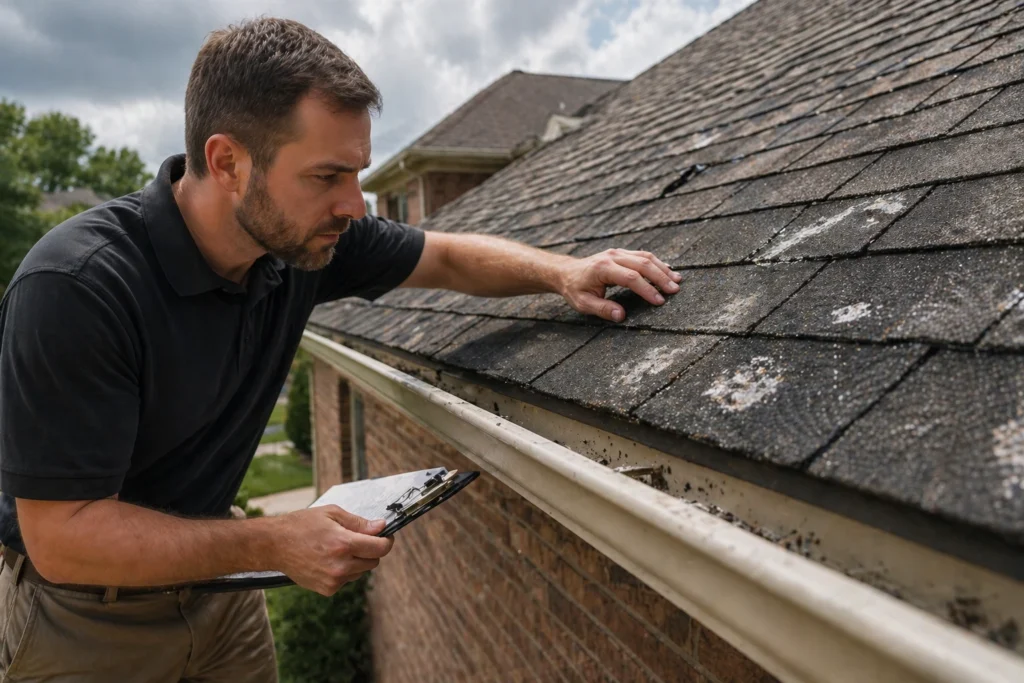
Hail hits fast. Loud. Unpredictable. One minute your roof is fine. The next, it’s compromised and you’re thrown into a process most homeowners never fully understand. That’s exactly why understanding Public Adjuster vs Insurance Adjuster for Hail Claims in Texas matters more than you think. This isn’t a small decision. It’s not just about who shows up to inspect your roof. It’s about who controls the narrative of your claim. Who documents the damage. Who negotiates the numbers. And ultimately, who determines how much money lands in your pocket.
In Texas, hailstorms are a recurring threat. They don’t just damage shingles they expose weaknesses in the insurance process itself. Many homeowners assume their insurance company will handle everything fairly and completely. Sometimes they do. Often, they don’t. If you’re in Plano, this becomes even more important. Insurance carriers are highly familiar with local claim patterns. That means tighter evaluations, faster inspections, and often stricter interpretations of damage. So let’s break it down. Clearly. Directly. No filler. Just real insight that helps you make the right call.
Understanding Hail Claims in Texas
What Happens After a Hailstorm
The process looks simple on paper. But in practice, it’s layered and often rushed.
Here’s the typical sequence:
- You notice damage or suspect it
- You file a claim with your insurance provider
- The insurance company assigns an adjuster
- An inspection is scheduled
- A repair estimate is created
- A settlement is offered
At this point, most homeowners assume the process is complete.
It’s not.
Why Hail Claims Are Often Undervalued
This is where things quietly go wrong. Insurance companies operate on systems designed for efficiency. Adjusters often handle multiple claims per day. Time is limited. And inspections, while professional, are not always exhaustive.
Common issues include:
- Overlooking subtle damage like shingle bruising
- Missing soft metal impact points
- Ignoring underlying structural concerns
- Excluding code-required upgrades
Each missed item reduces your total claim value. Not dramatically at first. But cumulatively? It adds up fast.
Who Is an Insurance Adjuster?
Role and Responsibilities
An insurance adjuster is assigned by your carrier to evaluate your claim. They may be a staff adjuster or an independent contractor hired during high-volume storm periods.
Their responsibilities include:
- Inspecting your property
- Identifying covered damage
- Creating an estimate
- Recommending a payout
Primary Objective
Here’s where clarity matters. Insurance adjusters work for the insurance company. Their obligation is to the carrier not the homeowner.
That means their priorities include:
- Controlling claim costs
- Following internal guidelines
- Closing claims efficiently
They are not incentivized to maximize your payout.
How Insurance Adjusters Evaluate Hail Damage
Most inspections are efficient and standardized.
They typically:
- Conduct a visual roof inspection
- Check for obvious hail hits
- Document findings with photos
- Input data into estimating software
But many forms of hail damage aren’t obvious. They require time, experience, and a deeper inspection process to identify. That’s where gaps begin.
Who Is a Public Adjuster?
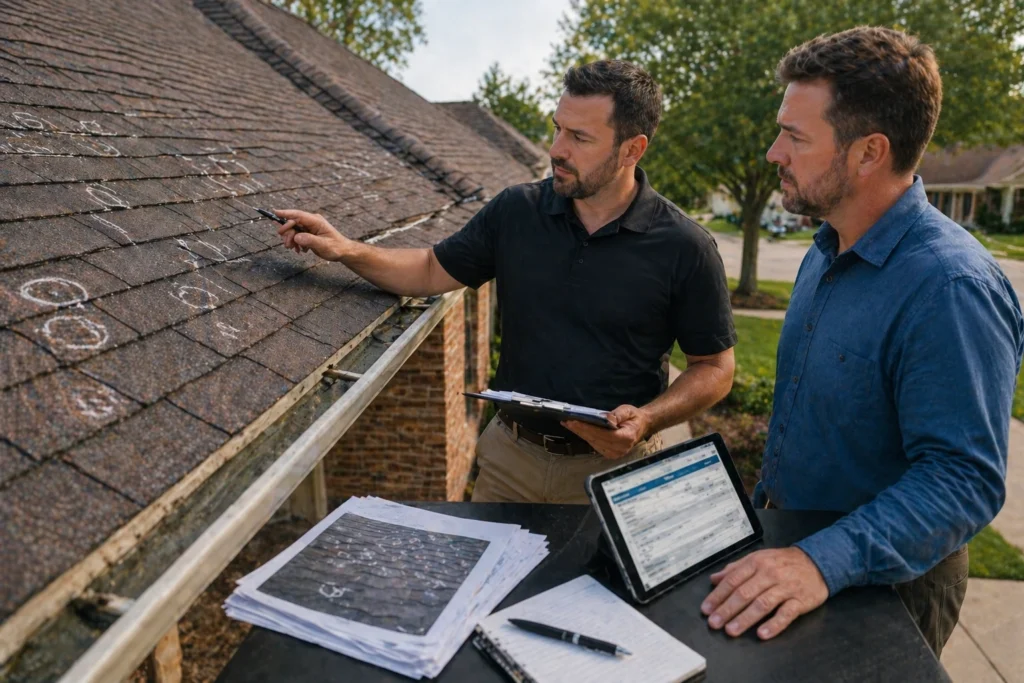
Role and Responsibilities
A public adjuster is a licensed professional you hire to represent your interests during the claim. They work independently from the insurance company and focus entirely on your side of the equation.
Their role includes:
- Performing a comprehensive property inspection
- Documenting all visible and hidden damage
- Preparing a detailed claim estimate
- Handling communication with the insurer
- Negotiating the claim settlement
Primary Objective
Their goal is straightforward: ensure you receive the full amount you’re entitled to under your policy. Not less. Not rushed. Not incomplete.
How Public Adjusters Handle Hail Claims
Public adjusters take a different approach from the start.
They:
- Spend significantly more time inspecting your property
- Identify both visible and concealed damage
- Use detailed photography and reporting
- Build line-by-line estimates using tools like Xactimate
- Cross-reference findings with policy language
They don’t just inspect. They build a case.
Public Adjuster vs Insurance Adjuster: Side-by-Side Comparison
Here’s a clear comparison to simplify the decision:
| Factor | Insurance Adjuster | Public Adjuster |
| Representation | Insurance company | Homeowner |
| Objective | Control claim cost | Maximize payout |
| Inspection depth | Basic to moderate | Highly detailed |
| Documentation | Standard | Extensive and strategic |
| Negotiation | Minimal | Aggressive advocacy |
| Claim outcome | Often lower | Typically higher |
This table captures the core of Public Adjuster vs Insurance Adjuster for Hail Claims in Texas. But the real difference shows up in the details.
Key Areas Where Outcomes Differ
Inspection Quality
This is the foundation of your claim. Insurance adjusters work quickly. Public adjusters work thoroughly.
A thorough inspection identifies:
- Granule loss patterns
- Shingle bruising
- Flashing damage
- Vent and ridge cap issues
- Gutter and soft metal impacts
Missing even a few of these can significantly affect your claim.
Scope of Repairs
Insurance estimates often focus on visible repairs.
Public adjusters expand the scope to include:
- Code compliance upgrades
- Matching materials requirements
- Underlayment replacement
- Hidden water intrusion risks
The scope defines the payout. A broader scope equals a higher claim value.
Claim Documentation
Documentation is everything.
Insurance side:
- Basic photos
- Standard notes
- Limited justification
Public adjuster side:
- High-resolution images
- Detailed reports
- Line-item explanations
- Supporting evidence for every claim
More documentation strengthens your position during negotiations.
The Supplement Process: Where Public Adjusters Excel
What Is a Claim Supplement?
A supplement is an addition to the original estimate. It accounts for missed or newly discovered damage.
Why Supplements Are Critical
Initial estimates are rarely complete. That’s not speculation it’s industry reality. This is exactly where Hail Damage Claim Supplements: What Carriers Miss in Their Scope becomes relevant. Most initial scopes overlook critical components that only surface through deeper inspection and persistence. This is why understanding Public Adjuster vs Insurance Adjuster for Hail Claims in Texas goes beyond the initial inspection. It’s about what happens after.
How Public Adjusters Increase Claim Value
Public adjusters actively pursue supplements by:
- Identifying missing line items
- Providing documentation to justify additions
- Re-engaging the insurance company for approval
- Negotiating based on evidence
Each supplement increases the total claim value.
Real-World Scenario: Comparing Outcomes
Let’s look at a realistic example.
| Stage | Without Public Adjuster | With Public Adjuster |
| Initial estimate | $15,000 | $15,000 |
| Missed items identified | $0 | $8,500 |
| Supplements approved | $0 | $7,000 |
| Final payout | $15,000 | $30,500 |
Same property. Same storm. Different representation. That’s the real impact of Public Adjuster vs Insurance Adjuster for Hail Claims in Texas.
Common Mistakes Homeowners Make
These mistakes are more common than you think and they directly impact your payout.
Avoid these:
- Accepting the first settlement without review
- Skipping a second inspection
- Failing to document damage immediately
- Ignoring minor issues that can worsen over time
- Misunderstanding policy coverage limits
Each mistake creates gaps in your claim.
When Should You Hire a Public Adjuster?
Ideal Situations
You should strongly consider hiring a public adjuster if:
- Your roof has significant hail damage
- Your claim was denied or underpaid
- You’re dealing with a complex property
- You don’t have time to manage the process
- You want expert-level documentation and negotiation
Situations Where You May Not Need One
- Minor, clearly visible damage
- Straightforward claims with full approval
Even then, getting a second opinion is often a smart move.
Cost vs Value: Is Hiring a Public Adjuster Worth It?
Typical Fee Structure
Public adjusters usually charge a percentage of the final claim amount typically between 5% and 10%.
ROI Analysis
Let’s break it down:
| Scenario | Amount |
| Without adjuster | $20,000 |
| With adjuster | $35,000 |
| Fee (10%) | $3,500 |
| Net payout | $31,500 |
You still come out significantly ahead. It’s not about cost. It’s about outcome.
Advanced Claim Strategies Most Homeowners Miss

This is where claims are either average or optimized.
1. Pre-Inspection Documentation
Before filing a claim, document everything:
- Take wide-angle and close-up photos
- Record video walkthroughs
- Note the date and time of the storm
This creates a baseline.
2. Material Matching Requirements
Texas policies often require matching materials. If your shingles are discontinued or weathered, partial repairs may not be enough.
This can increase your claim value.
3. Code Upgrade Coverage
Building codes evolve over time. Your policy may include coverage for upgrades required by current standards, which can significantly raise your claim amount.
4. Understanding Complex Evaluation Models
Insurance decisions often follow structured evaluation logic. Some frameworks resemble mathematical systems like Eigenvalue, where outcomes shift depending on the variables introduced.
In practical terms, better documentation and stronger evidence directly influence your claim result.
Local Insight: Hail Claims in Plano
In Plano, hail claims follow a predictable but competitive pattern.
Insurance companies are experienced in this region. That leads to:
- Faster inspections
- Standardized estimates
- Increased scrutiny on claims
That means your documentation must be sharper.
Your inspection must be deeper.
And your claim must be stronger.
Working with professionals who understand these local dynamics gives you an advantage.
How to Choose the Right Public Adjuster
Not all public adjusters deliver the same results. Choose carefully.
What to Look For
- Valid Texas licensing
- Proven experience with hail claims
- Strong documentation processes
- Transparent fee structure
- Consistent communication
Questions to Ask
- How do you approach supplements?
- What’s your typical claim increase?
- How do you handle negotiations?
- What does your documentation process look like?
Clarity upfront leads to better outcomes.
Public Adjuster vs Insurance Adjuster for Hail Claims in Texas: Final Verdict
Let’s simplify it.
Insurance adjusters process claims.
Public adjusters build them.
That’s the difference.
When evaluating Public Adjuster vs Insurance Adjuster for Hail Claims in Texas, your outcome depends on:
- Representation
- Documentation quality
- Negotiation strategy
If your goal is speed, the insurance route may feel easier.
If your goal is accuracy and maximum financial recovery, a public adjuster is the stronger choice.
Conclusion: Take Control of Your Hail Claim Outcome
Hail damage is unpredictable. Your claim outcome doesn’t have to be. The gap between a low payout and a fully covered repair often comes down to one decision who represents you. If you’re dealing with hail damage in Plano, the environment is competitive. Insurance carriers are efficient and experienced. You need to match that level of preparation.
Document early. Review everything. Challenge incomplete estimates. And if necessary, bring in someone whose only job is to protect your interests. Because this isn’t just about fixing a roof. It’s about making sure you don’t leave money on the table and securing the outcome you deserve.
FAQs
An insurance adjuster works for the insurance company, while a public adjuster represents you and advocates for a higher claim payout.
Not always, but for large, complex, or underpaid claims, a public adjuster can significantly improve your outcome.
They typically charge 5%–10% of the final claim amount, depending on the complexity of the claim.
Yes, they often identify missed damage and negotiate supplements, which can raise the total settlement.
A supplement is an additional request for funds when new or previously missed damage is discovered after the initial estimate.
They often work under time constraints and follow standardized processes, which can lead to overlooked details.
You should consider one if your claim is denied, underpaid, or involves significant hail damage.
Yes, but without professional experience, it can be difficult to identify all damage and negotiate effectively.
It can take a few weeks to several months, depending on the complexity and whether supplements are involved.
Not necessarily while it may add steps, it often leads to a more accurate and complete settlement.