
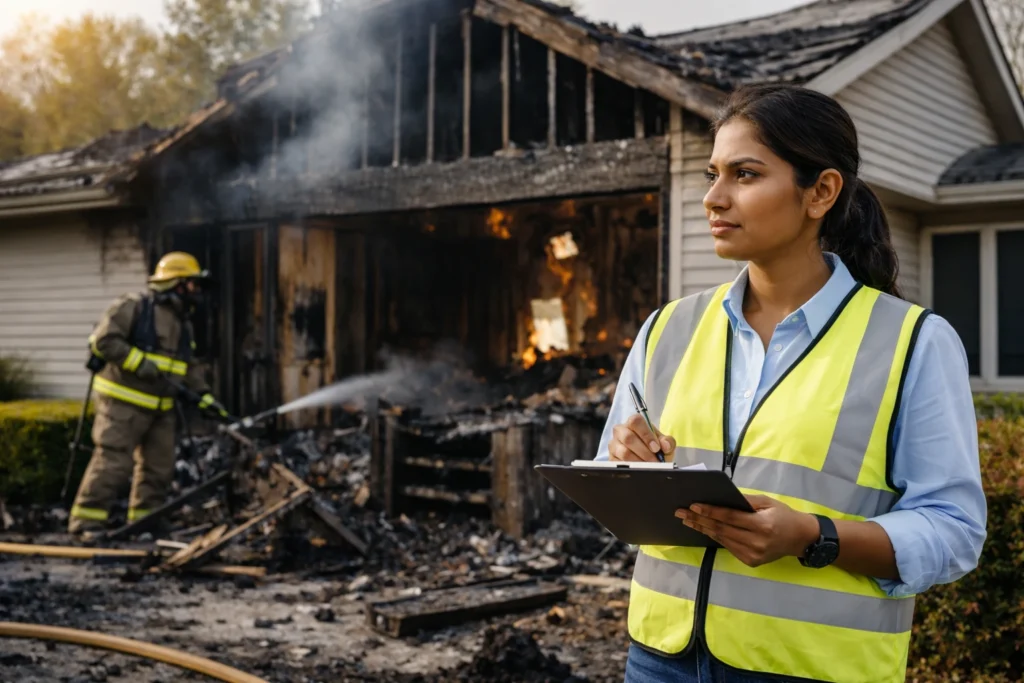
A house fire changes everything in an instant. One moment, life feels normal. The next, you’re standing outside watching smoke pour out of your home, wondering what comes next. This is exactly where a fire insurance adjuster enters the picture and trust me, their role can make or break your financial recovery.
I’ve seen it happen too often. Homeowners assume the insurance company will handle everything fairly. Sometimes they do. But sometimes they don’t. That gap between what you’re owed and what you’re offered is where expertise matters most. If you’re dealing with fire damage in Plano or anywhere nearby, understanding how a fire insurance adjuster works isn’t optional. It’s essential.
What Is a Fire Insurance Adjuster?
A fire insurance adjuster is a professional who evaluates fire-related damage and determines how much the insurance company should pay for your loss. Sounds simple. It’s not.
There are actually three types:
- Insurance Company Adjuster – Works for your insurance provider
- Independent Adjuster – Hired by insurers on a contract basis
- Public Adjuster – Works for you, the policyholder
That last one is the game changer. Because here’s the truth. Insurance company adjusters are trained to protect the company’s bottom line. Public adjusters are hired to protect yours.
Fire Insurance Adjuster vs Public Adjuster
Let’s break this down clearly.
| Type of Adjuster | Who They Work For | Goal |
| Company Adjuster | Insurance company | Minimize payout |
| Independent Adjuster | Insurance company | Support insurer decisions |
| Public Adjuster | You (homeowner) | Maximize your claim |
Short version? Not all adjusters are on your side. This is where many homeowners get caught off guard. They assume the adjuster showing up is their advocate. In reality, that person is often representing the insurer’s interests. A fire insurance adjuster who works for you changes the dynamic entirely
What Does a Fire Insurance Adjuster Actually Do?
This isn’t just someone walking through your property with a clipboard. A skilled fire insurance adjuster performs a detailed, multi-step evaluation that directly impacts your payout.
Here’s what they handle:
- Damage Inspection
They assess structural damage, smoke penetration, and hidden issues. - Policy Review
They interpret your insurance policy line by line. - Loss Documentation
Every damaged item gets recorded, valued, and justified. - Cost Estimation
Repairs, replacements, and rebuild costs are calculated accurately. - Negotiation
This is where experience pays off literally.
Let me be blunt. If your damage isn’t documented properly, you don’t get paid for it. It’s that simple.
The Fire Insurance Claim Process (Step-by-Step)
Filing a claim isn’t just paperwork. It’s a process with multiple pressure points.
Here’s how it unfolds:
- Initial Claim Filing
You notify your insurer about the fire. - Inspection Phase
The insurance company sends their adjuster. - Documentation Phase
You list everything damaged or lost. - Estimate Review
The insurer presents their valuation. - Negotiation
This is where disputes often begin. - Settlement
Final payout is issued.
A fire insurance adjuster especially a public one guides you through each step and challenges low estimates when needed.
When Should You Hire a Fire Insurance Adjuster?
Immediately. Seriously.
But here are specific situations where it becomes critical:
- Large or total-loss fires
- Claims involving structural damage
- Delayed responses from insurance companies
- Settlement offers that feel too low
- Confusing policy language
If you feel overwhelmed, that’s your signal. Bring in a professional. Because once you accept a settlement, you usually can’t go back.
How a Fire Insurance Adjuster Helps Maximize Your Claim
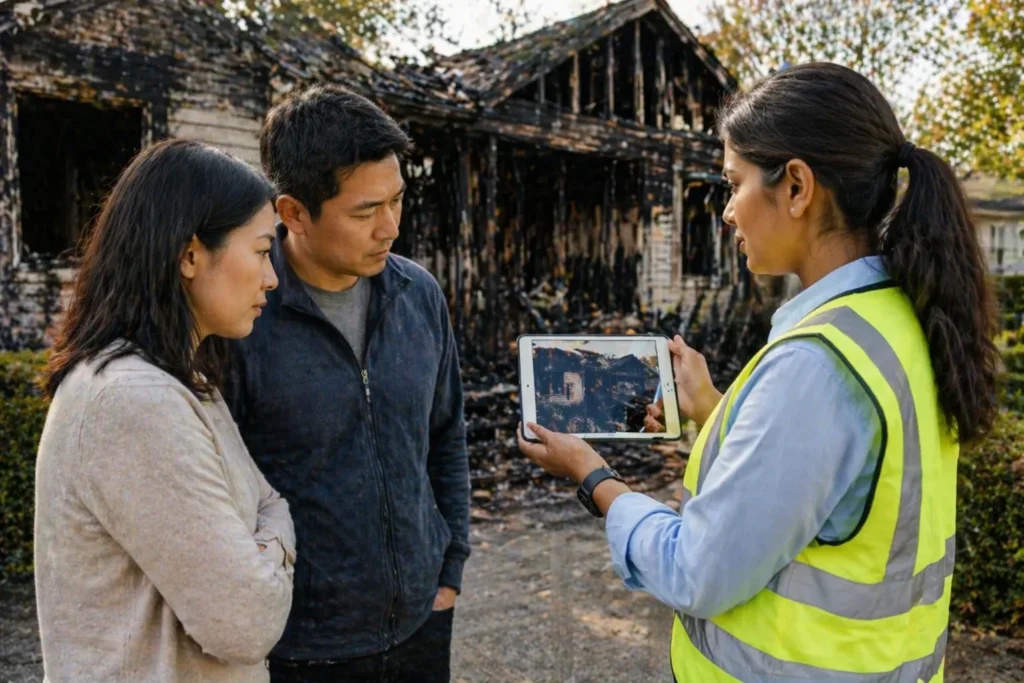
Let’s talk money. Because that’s what’s at stake. A qualified fire insurance adjuster doesn’t just “review” your claim. They actively increase its value by uncovering details others miss.
Here’s how:
- Hidden Damage Identification
Smoke and soot can travel into walls, HVAC systems, and insulation. - Accurate Replacement Costs
Not guesswork. Real market-based valuations. - Complete Inventory Building
Every item counts furniture, electronics, clothing. - Strategic Negotiation
They push back against lowball offers.
Example Scenario
A homeowner initially receives a $120,000 estimate from their insurer. After hiring a public adjuster, the final settlement increases to $185,000. That difference? Documentation, expertise, and persistence.
Common Mistakes Homeowners Make After a Fire
Mistakes happen fast in stressful situations. Avoid these:
- Accepting the first offer too quickly
- Throwing away damaged items before documentation
- Underestimating smoke damage
- Failing to read the policy carefully
- Not hiring a fire insurance adjuster early
Short-term decisions can lead to long-term losses.
Types of Fire Damage Covered by Insuranc
Not all damage is obvious. And not all of it is treated equally.
Most policies cover:
- Structural Damage – Walls, roof, foundation
- Smoke and Soot Damage – Often underestimated
- Water Damage – From firefighting efforts
- Personal Property Loss – Furniture, appliances, valuables
- Additional Living Expenses (ALE) – Temporary housing
A good fire insurance adjuster ensures nothing is overlooked.
How Fire Damage Is Evaluated
Insurance companies don’t just “eyeball” damage. They use specific valuation methods.
Here are the key ones:
- Replacement Cost Value (RCV) – Cost to replace items new
- Actual Cash Value (ACV) – Replacement cost minus depreciation
That difference matters. A lot.
Quick Comparison
| Valuation Type | What It Means |
| RCV | Full replacement cost |
| ACV | Reduced value after wear and tear |
A skilled fire insurance adjuster fights to ensure you’re not unfairly pushed toward lower valuations.
Tips for Working With a Fire Insurance Adjuster
You don’t have to be passive in this process. Stay involved.
Here’s how:
- Take photos immediately after the fire
- Keep receipts for temporary expenses
- Ask for detailed explanations
- Review every estimate carefully
- Communicate regularly
And one more thing don’t rush decisions. Slow is smooth. Smooth is effective.
Why Hiring a Local Plano Public Adjuster Matter
Local knowledge is powerful.
A Plano-based public adjuster understands:
- Texas insurance regulations
- Local construction costs
- Contractor pricing trends
- Regional claim patterns
They’re not guessing. They know the landscape. And that often translates into faster, stronger results.
How to Choose the Right Fire Insurance Adjuster
Not all adjusters are equal. Choose wisely.
Look for:
- Proper licensing in Texas
- Proven experience with fire claims
- Transparent fee structure (usually contingency-based)
- Strong reviews and testimonials
- Clear communication style
Ask direct questions. If answers feel vague, move on.
Signs You Need Help Immediately

Some situations demand urgent action.
Watch for these red flags:
- Claim delays without explanation
- Low settlement offers
- Disputes over damage scope
- Poor communication from insurer
If any of these show up, bring in a fire insurance adjuster right away.
Resource Insight
In technical and scientific contexts, large-scale destructive fires are sometimes referred to as Conflagration. The term highlights how fires can spread rapidly and cause extensive, layered damage something that insurance estimates don’t always fully capture at first glance.
Conclusion
A fire doesn’t just damage property. It disrupts your entire life. And navigating the insurance process while dealing with that stress? It’s a heavy lift. This is why a fire insurance adjuster matters so much. They bring clarity when things feel chaotic. They bring structure when the process feels overwhelming. And most importantly, they help ensure you’re treated fairly.
If you’re facing a fire insurance claim in Plano, don’t go it alone. The difference between a quick settlement and a full recovery often comes down to who’s representing you. Make that decision carefully. It’s one of the most important ones you’ll make after the fire is out.
FAQs
A fire insurance adjuster evaluates fire damage, reviews your policy, and determines how much your insurance claim should pay.
You should hire one as soon as possible after a fire, especially for large or complex claims.
Most work on a contingency fee, meaning they take a percentage of your final settlement rather than charging upfront.
Yes, they often identify overlooked damages and negotiate better settlements, which can significantly increase your payout.
They assess structural damage, smoke and soot damage, water damage from firefighting, and personal property loss.
They assess structural damage, smoke and soot damage, water damage from firefighting, and personal property loss.
No, you can negotiate or hire a fire insurance adjuster to review and challenge the offer if it seems too low.
It can take weeks to months depending on the severity of the damage and how quickly documentation and negotiations are completed.
Document all damage with photos and videos, and avoid throwing away items until they are properly recorded.
A local adjuster understands Texas regulations, regional costs, and can respond quickly to manage your claim effectively.